
Nicholasville Previous Residents Across the Record Eras
A backward address trail changes character as it moves through time. Recent Nicholasville previous residents may be connected to a parcel through the PVA roll and recorded instruments. Earlier past residents are more likely to appear in deeds, census schedules, local newspapers, probate, cemetery books, or a regional directory. None of these sources alone is a complete household list, so the useful question is what each source proves and where its coverage ends.
| Source | Local years located | Where held | What it shows or misses |
|---|---|---|---|
| CCLIX deed, mortgage, and will index | June 30, 1966 to current; most images January 2004 to current | Jessamine County Clerk and eCCLIX | Parties, type, book/page, and transfers; some images need an account |
| Recorded Jessamine deeds | Some material reaches the 1700s | Clerk counter and KDLA | The legal ownership chain; exact book series must be requested |
| PVA parcel roll | Current roll; an official 2015 sample shows historical fields | Jessamine PVA and qPublic | Owner, situs, mailing, parcel, assessment, deed reference, and sales history |
| Local newspapers | 1887 to 2005 on JCPL microfilm | Jessamine County Public Library | Address mentions, notices, obituaries, and events |
| Sholes regional directory | 1885 to 1886 | UK ExploreUK | A Nicholasville taxpayer and business lead; local scan still needs inspection |
| Jessamine census microfilm | 1810 to 1930 listed | JCPL | Households at the census date, not a parcel history |
| Sanborn fire-insurance maps | Digital sets for 1886, 1892, 1897, 1903, and 1909 | Library of Congress | Buildings, materials, use, and street context, not occupants |
Start with the newest dated source that clearly identifies the same legal parcel. Then move backward one transfer or one household snapshot at a time. If the goal is a nineteenth-century address, begin with deeds and plats, then add census, directory, and newspaper evidence. If the goal is recent ownership, begin with the current parcel card and its deed reference.
Start Nicholasville Previous Residents Research at the PVA
The Jessamine County PVA is the bridge from a modern street label to the legal record. Its public qPublic screen could not be fully inspected during research, so do not assume a particular search field is present. Verified output fields from an official parcel-card exhibit include the situs address, owner, owner mailing address, parcel ID, legal description, subdivision, deed book/page, plat cabinet/sheet, assessment, exemption indicators, and sales history.
The distinction between situs and mailing address matters. An official sample places the parcel at 626 Burr Oak Drive while sending owner mail to 704 Chinkapin Drive. That does not prove a move, a second household, or who stayed at either place. It simply shows that tax correspondence can go somewhere other than the physical parcel. Record both fields exactly and attach the roll date before looking for previous residents.
Note. A PVA owner is an assessed owner, not a complete list of people who occupied the address.
Walk the Jessamine Deed Chain Backward
The Jessamine County deed chain is the firmest route through past ownership. Start with a parcel ID, current owner, deed book/page, and legal description from the PVA. The eCCLIX deed index supports book/page/type and combination party/date modes. The office index and images are free to inspect at 101 N. Main Street, while internet access can require registration, software, a subscription, or other fees.
- Copy the current PVA situs, parcel ID, legal description, plat reference, owner, and deed book/page.
- Open that purchase deed and record the grantor, grantee, recording date, prior deed reference, and full land description.
- Search the seller as a prior grantee, narrowing identical names by date, subdivision, legal description, or book/page.
- Repeat the transfer path while the index remains clear, preserving each spelling and initials variant.
- When an image or index entry ends, request the cited book/page at the Clerk counter or through an archive request.
- Grantor and grantee
- The grantor transfers an interest; the grantee receives it. Their roles reverse as the chain moves backward.
- Chain of title
- The linked series of recorded transfers for the same legal parcel.
- Legal description
- The lot, block, subdivision, plat, acreage, or boundary text that identifies land when a street label changes.
The manifest capture from the official eCCLIX login shows the access gate a remote researcher meets before a Nicholasville deed search.
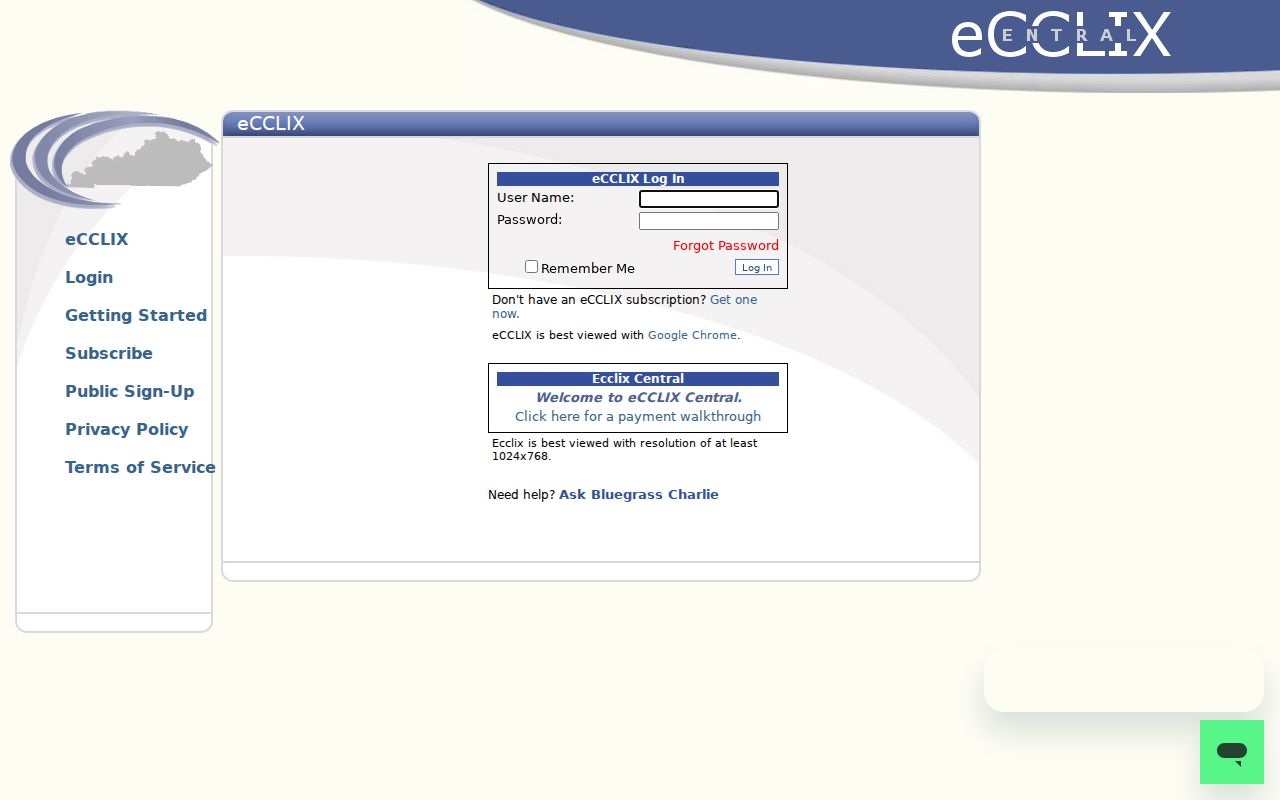
The screen is an entry point, not proof that every old deed image is available online, which is why the Clerk counter remains part of the workflow.
The Nicholasville Previous Residents Digital Breakpoints
The local index dates divide the work into practical eras. The deed, mortgage, and will index reaches back to June 30, 1966. Most internet document images begin in January 2004. Thus, a 2004-forward search has the strongest chance of pairing an index hit with an image. A 1966-to-2003 search may yield an index without a universal online image. Earlier work depends more heavily on deed books, microfilm, the County Clerk, or the Kentucky Department for Libraries and Archives.
The public Jessamine eCCLIX signup page makes the county-specific registration route visible before searching previous residents remotely.
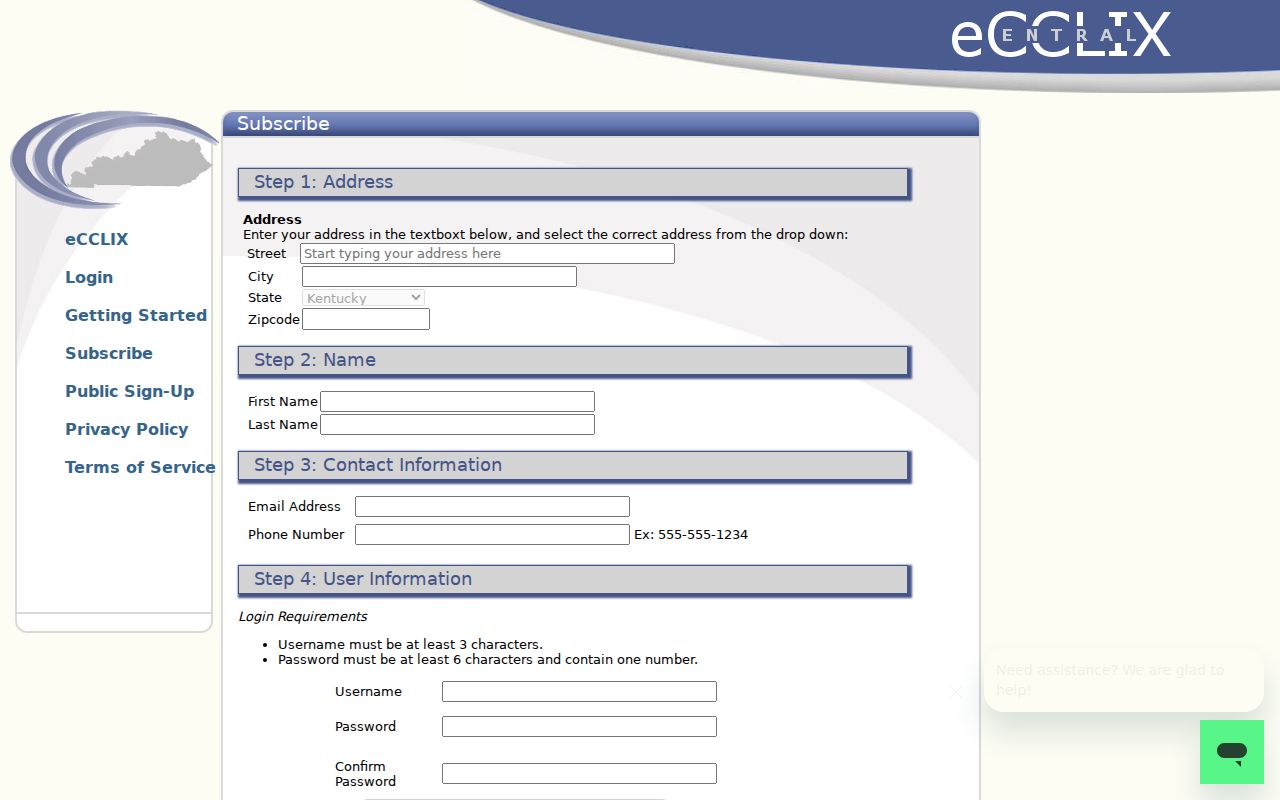
Registration does not replace the recorded instrument. The Clerk warns that the online index is not guaranteed complete or correct, so legal reliance belongs on the deed itself.
Keep Nicholasville Previous Residents Tied to the Plat
A street number can fail as a historical key. No official Nicholasville renumbering or street-renaming schedule was found, so assigning a guessed change year would create a false link. When the address vanishes, keep searching the legal description, subdivision, plat cabinet/sheet, deed book/page, old street spelling, and adjoining parcels. Those fields can preserve continuity even when the postal label changes.
A recorded plat also explains why nearby land may not be the parcel it first appears to be. Easements, road rights-of-way, shared drives, rear lots, and metes-and-bounds tracts can disrupt a simple street sequence. PVA and GIS are reference tools, but deeds and plats control the legal boundary. For a current by-address chain, the Nicholasville street directory carries the fuller modern parcel workflow.
Five Sanborn Views of Old Nicholasville
The Library of Congress lists digital Nicholasville fire-insurance map sets for October 1886, June 1892, August 1897, October 1903, and March 1909. Their sheet counts grow from five to seventeen across the sequence. The maps can show a building footprint, number of stories, construction material, use, lot lines, road widths, street names, and water facilities. They cannot name previous residents.
Compare the same corner or street on consecutive sheets, then connect that footprint to a deed plat and a dated newspaper reference. Metadata also identifies 1927 and 1927-to-1940 sets, but those records were not marked digital in the research. Treat their existence as a catalog lead, not as an available online image. This map sequence gives Nicholasville house history a rare physical layer without confusing a structure with its occupants.
Match Nicholasville Previous Residents to Household Sources
Ownership and occupancy are different questions. Once the deed chain dates a parcel, compare its transfer periods with household sources. JCPL lists Jessamine census microfilm from 1810 through 1930, local newspaper microfilm from 1887 through 2005, and an obituary index from 1887 through 2015. The verified Sholes 1885-to-1886 regional directory expressly includes Nicholasville taxpayers and businesses, but its local page and exact entry fields were not rendered during research.
- Choose a deed interval and note every spelling of the owner name and address.
- Check the nearest released census schedule, keeping its census date and enumeration context attached.
- Use the Sholes object or a confirmed local directory year only after checking that Nicholasville coverage exists.
- Search the JCPL obituary index for a name and publication date, then retrieve the newspaper page from microfilm or a licensed database.
- Compare relatives, witnesses, executors, and heirs with probate or cemetery records, without assuming each person occupied the parcel.
The collections and reading methods are detailed on the Nicholasville city directory page. Here, they serve one purpose: placing a dated household clue alongside a dated land record.
Probate and Obituaries Close Nicholasville Gaps
An estate transfer may name heirs or a fiduciary without looking like an ordinary sale. FamilySearch catalogs Jessamine probate records for 1799 through 1927 and indexes through 1986. Original wills, inventories, petitions, guardianships, and later files remain matters for the county court or KDLA. The Jessamine Historical Society surname and circuit index can supply a box/page lead for an older court file when a modern portal does not reach the case.
JCPL offers a strong name-to-date route. Search its obituary index, retrieve the cited Jessamine Journal page from 1887-to-2005 microfilm or later database coverage, and compare the notice with probate and cemetery material. Maple Grove and church or family cemetery books can add burial dates and family clusters. These sources may explain why title passed, but kinship alone never proves that every named relative lived at the Nicholasville address.
Request Missing Nicholasville Previous Residents Records
When the screen stops, use a precise fallback. Jessamine County Clerk Legal Records is at 101 N. Main Street, Nicholasville, and its office counter permits free inspection of public indices and documents. JCPL at 600 S. Main supplies microfilm, books, and staff help; call before traveling for a specific reel. The Historical Society offers scheduled research periods and appointments. KDLA holds older county and circuit-court series in Frankfort.
Ask for a named source, parcel, and date range: “Please identify the deed-book/page chain, parcel-card sales history, microfilm citation, obituary-index entry, or historical file for [address and legal description] during [date range].” Ask whether the response is an index hit, an image, an official copy, or a negative search. County open-record requests may be sent by email, mail, or hand delivery, and the normal response period is five business days.
Lawful use. Research Nicholasville previous residents for family or house history, and never use a record trail to track, intimidate, or expose a living person.